2026-10-24 ·
How to Spot Dust and Debris Buildup in Benbrook Air Ducts
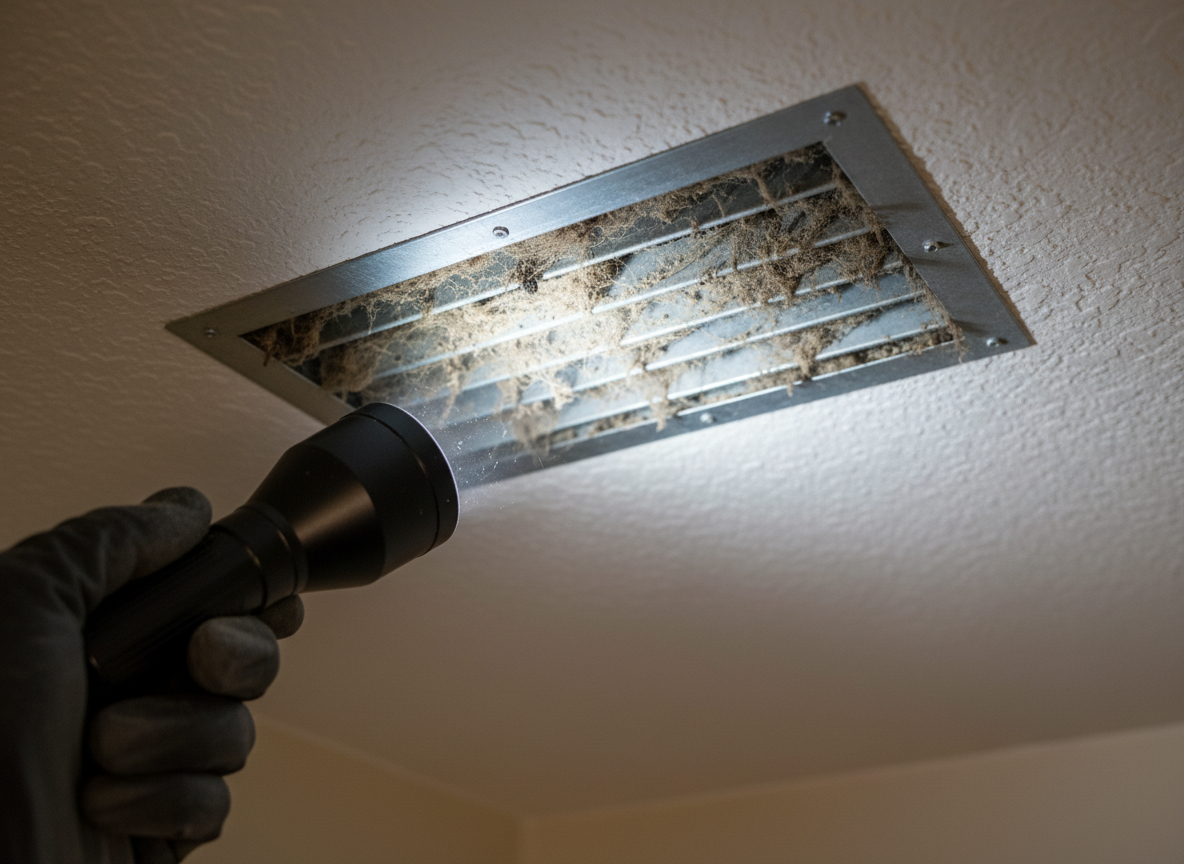
Benbrook residents notice dust and debris buildup in air ducts most often through visible layers around floor and ceiling vents, reduced airflow from registers, and a persistent musty smell when the HVAC runs. These indicators appear faster in older single-family homes common in areas like Westpark Estates and Lake Benbrook Estates where original ductwork has collected years of fine Texas dust and pollen.
Checking Vents and Registers in Benbrook Homes
Start by removing a few vent covers in living areas and bedrooms. Look for gray or black particulate coating the inside edges and the metal fins. In homes built before 1990 in neighborhoods such as Brookside Estates and Meadow Park, this film often measures 1/8 inch or thicker because the original flex duct traps particles that newer rigid systems shed less readily. Run your finger along the register blades; if residue comes away easily and smells earthy, the main trunk lines likely carry similar material. Repeat the check in at least three rooms on different floors to confirm the pattern holds across the system rather than appearing only near the return.
Monitoring Airflow and Temperature Differences
Turn the thermostat to fan-only mode and place a lightweight tissue or strip of paper over each supply vent. Weak or uneven pull indicates restricted passages caused by debris accumulation. In Benbrook homes with two-story layouts near Timber Creek or Rolling Hills, upper-floor vents often show the first drop in pressure because warm air rises and carries more suspended dust through longer vertical runs. Measure the temperature at the vent with a simple infrared thermometer; a difference of more than 3 degrees between rooms usually traces back to partial blockages rather than insulation issues. These checks take under ten minutes and reveal problems before they affect the entire HVAC unit.
Recognizing Odors and Allergy Patterns
Musty or stale smells that appear within minutes of the blower starting point to organic debris trapped in duct walls. Residents in Mont Del and Country Glen frequently report stronger odors after heavy rain because moisture allows mold spores already present in the ducts to become airborne. Track allergy symptoms or sinus irritation that improves when family members leave the house for several hours; consistent indoor-only reactions often link directly to recirculated particles. Cedar Sync notes these patterns repeat most in ranch-style homes where return ducts run through attics exposed to seasonal temperature swings.
When Local Conditions Accelerate Buildup
Benbrook’s mix of older brick homes and newer construction near Benbrook Lake means duct systems face different debris loads. Properties in Hidden Valley and Clearview Hills sit closer to open land where wind carries fine soil into attic returns. Dry summers increase static that holds dust inside metal ducts, while winter heating cycles push the same material through the house. Checking filters monthly and noting how quickly they darken gives an early warning before visible signs appear at the vents. For detailed guidance on timing these inspections, see How Often Benbrook Homes Need Air Duct Attention.
Next Steps After Spotting Buildup
Once signs appear, schedule a full inspection rather than attempting DIY cleaning that can dislodge debris deeper into the system. Homeowners in Ridglea Hills and Bellaire Park often combine duct work with residential air duct cleaning to restore proper airflow. Understanding cost variables helps with planning; read What Influences Air Duct Cleaning Costs in Benbrook Homes for realistic ranges based on home size and duct access. Cedar Sync operates from 8516 Benbrook Blvd and remains available 24/7 for assessments when symptoms become noticeable.