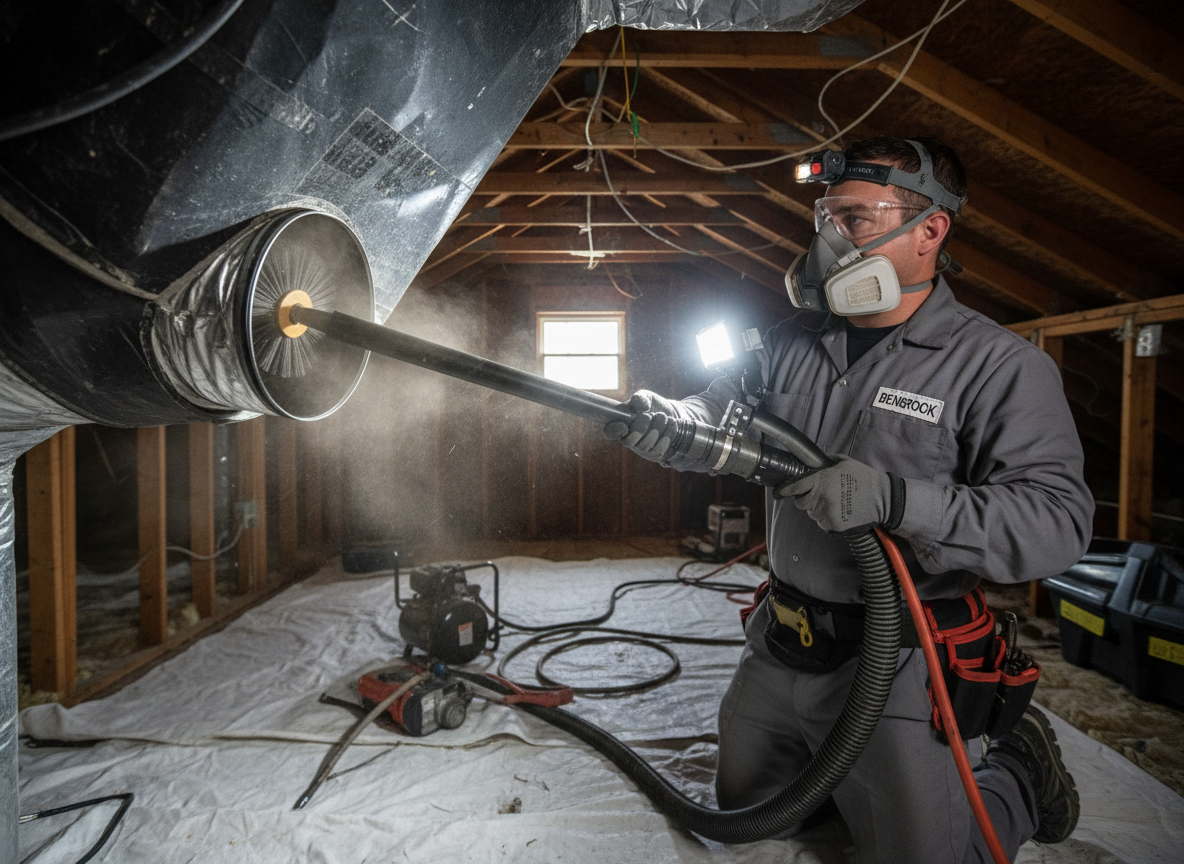
Benbrook homes, particularly those along Winscott Road and near Benbrook Lake, often feature original metal duct runs installed in the 1970s and 1980s. Clay soils in Tarrant County shift with seasonal rains, loosening joints and allowing fine dust from the surrounding plains to enter the system. Constant summer air conditioning use pulls in pollen and outdoor debris, which settles in the trunk lines and branches. Cleaning requires negative-air machines to avoid spreading contaminants through the house while accessing registers without damaging the flex sections common in these older builds.
High humidity near the Trinity River corridor causes dust to cake inside ducts rather than staying loose, especially in single-story homes where long horizontal runs trap moisture. Technicians must check for insulation gaps around attic ducts, which worsen during the hot months when systems run nonstop. Edge cases include homes with added room extensions where new ductwork connects poorly to the original trunk, creating hidden restriction points that reduce airflow to bedrooms.
Proper cleaning here means sealing off each register, using brushes sized for the duct diameter, and verifying static pressure afterward. Homeowners sometimes attempt DIY vacuuming through vents, which only pushes debris deeper into inaccessible sections. In Benbrook’s mix of older and newer construction, the work focuses on restoring balance so that every room receives even conditioned air without pulling in attic dust during the next cooling cycle.
Technician insight
In Benbrook, the thing that catches most people out with HVAC duct cleaning is how clay soil along the lake shifts the slab and opens joints in the original metal ducts, letting fine dust from the plains pack tight during the long cooling season. Homeowners often miss that the problem starts at the trunk line near the unit rather than just at the vents.
Restricted airflow in a Winscott Road home
A Benbrook resident near the lake noticed weak airflow in back bedrooms. Inspection showed settled dust and gaps at trunk joints caused by soil movement. Negative-air cleaning cleared the lines and sealed accessible connections. Airflow returned evenly and the homeowner stopped running the fan on high constantly.
How it works
- 1
System Inspection
Technician examines all accessible ducts, registers, and the HVAC unit to map the layout and identify problem areas specific to the home’s construction.
- 2
Containment Setup
Registers are sealed and negative-air equipment is connected to contain dust during cleaning, protecting living spaces in the Benbrook home.
- 3
Mechanical Cleaning
Brushes and air whips dislodge debris from trunk lines and branches while the vacuum system removes it, paying special attention to joints loosened by local soil movement.
- 4
Final Verification
Airflow and pressure are checked at multiple points to confirm the system moves air evenly before equipment is removed.
Pricing
Cost depends on number of runs, access difficulty, and whether the home has original 1970s ductwork; upfront quotes provided after inspection.