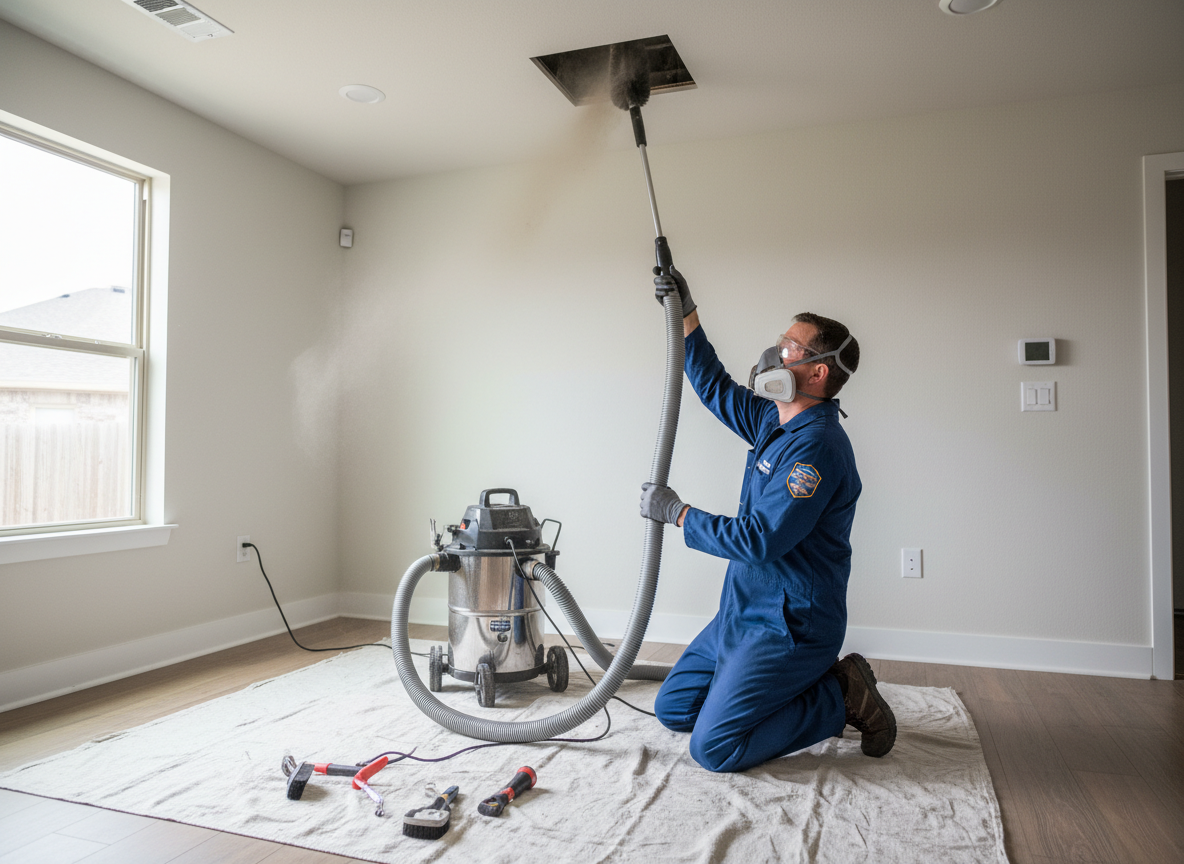
Benbrook homes built from the 1950s onward often feature trunk-and-branch duct systems routed through attics and crawl spaces where Texas heat and seasonal humidity drive dust and pollen accumulation. Cedar Sync techs at 8516 Benbrook Blvd respond any hour to clear these lines without removing registers when possible, using negative-air machines sized for the typical 1,800- to 2,400-square-foot ranch layouts common along Winscott Road and Dutch Branch.
Summer storms and the constant run of central air create static buildup inside flex duct runs that older fiberglass insulation cannot shed on its own. Crews inspect for disconnected boots at ceiling boxes and collapsed sections near the slab edge before any vacuuming begins, preventing the common mistake of simply blowing debris deeper into wall cavities.
Tarrant County soil movement shifts foundations slightly each year, kinking rigid duct elbows in many 1970s-era Benbrook properties. A 24/7 call often starts with a camera sweep to locate these pinch points so the team can restore full airflow instead of just cleaning accessible trunk lines.
Residents near Benbrook Lake notice extra outdoor allergens entering through roof vents during spring winds. The service includes sealing accessible gaps at the plenum after cleaning so the next pollen load stays outside rather than recirculating through the same registers.
Technician insight
In Benbrook the thing that catches most people out with 24/7 Air Duct Cleaning is how many 1960s and 1970s homes along Benbrook Blvd have had rooms added without proper duct redesign, so the new flex runs sag and trap debris that standard trunk cleaning never reaches.
Collapsed Flex in Dutch Branch Addition
A homeowner in a 1972 Dutch Branch home called after noticing weak airflow in the new bedroom wing. Camera inspection showed a sagging flex run pinched by attic insulation and shifted framing. The crew isolated the section, extracted years of settled dust, straightened and supported the duct, then verified airflow returned to the register.
How it works
- 1
Initial Assessment
Arrive at the Benbrook address, review access points in attic or crawl space, and map the duct layout for the specific home age and construction.
- 2
System Isolation
Seal registers and set up negative-air equipment to contain debris while protecting living spaces from cross-contamination.
- 3
Agitation and Extraction
Run whips or brushes through each branch line while the vacuum pulls material into the collection unit, focusing on settled dust in low spots created by local soil movement.
- 4
Final Inspection
Re-check with camera, confirm restored airflow at each register, and note any areas needing homeowner follow-up such as vent sealing.
Pricing
Pricing varies by number of runs, access difficulty in attics or crawl spaces, and whether flex duct replacement is needed; call for an upfront quote.