Benbrook homes built from the 1960s onward often feature metal duct runs through attics and crawlspaces that collect fine West Texas dust and pollen pushed through the system by constant summer AC use. Lake humidity near the reservoir adds moisture that lets mold spores cling inside the lines, especially where insulation has settled or joints have loosened over decades. A standard vacuum pass misses these layers, leaving residue that recirculates every time the blower kicks on.
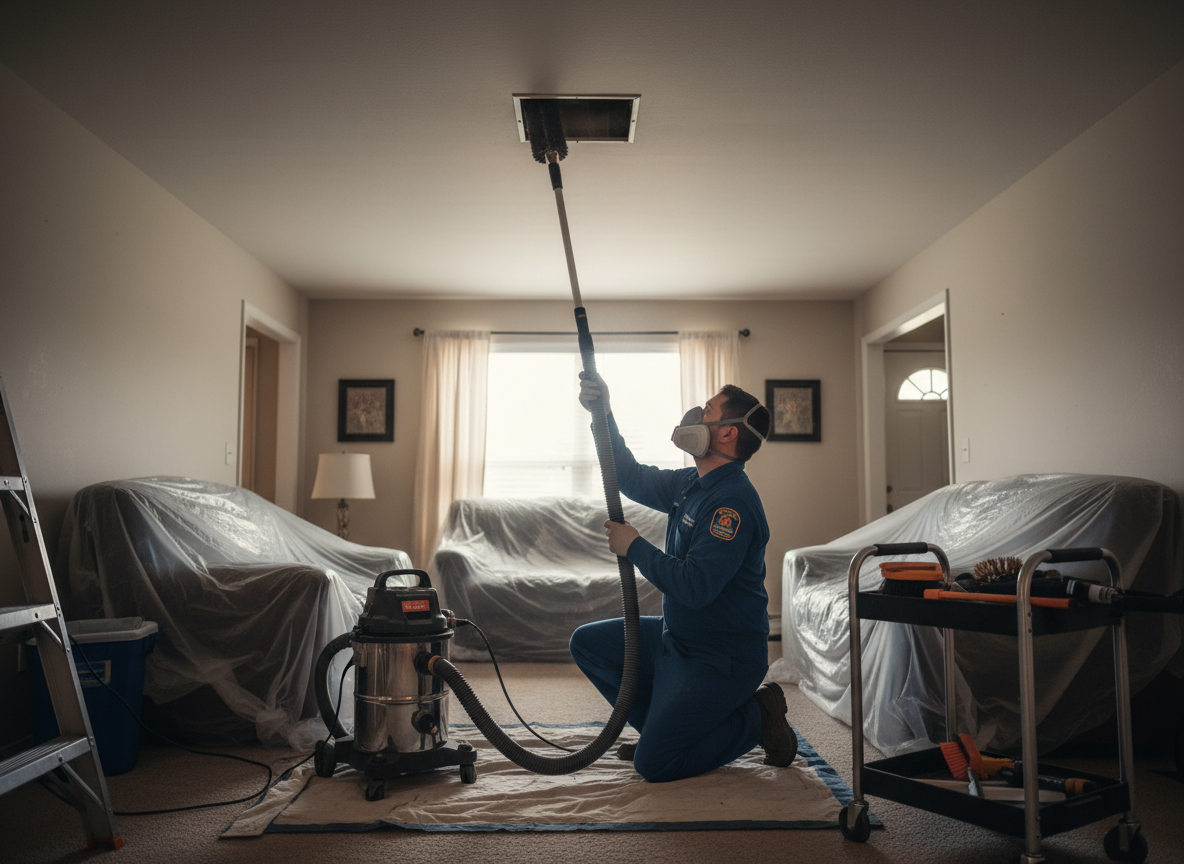
We start by mapping every supply and return in the house, then use negative-air machines sized for the duct diameter common in these older builds. Flexible whips and brushes reach the 90-degree elbows that trap debris in ranch-style layouts around Benbrook. After cleaning we check static pressure to confirm airflow is restored without creating new leaks at the seams.
Homeowners sometimes try DIY brushes or foggers that only move dust downstream into the furnace. In Tarrant County’s variable spring winds, that loosened material quickly re-enters through unsealed returns. Our process seals access points and replaces damaged insulation sections so the system stays cleaner between visits.
Seasonal Timing
Heavy AC runtime from May through September packs more contaminants into Benbrook ducts than winter months. Scheduling before the first heat wave prevents the system from blowing winter construction dust through the house when cooling starts.
Technician insight
In Benbrook, the thing that catches most people out with air vent cleaning is crawlspace humidity near the lake that lets mold grow on the underside of ducts where standard brushes never reach; once the AC runs hard in summer that growth gets aerosolized throughout the house.
Hidden Mold in Lake-Area Crawlspace
A 1970s ranch near Benbrook Lake had persistent musty smells despite filter changes. We found heavy mold on duct bottoms in the humid crawlspace. Negative-air cleaning plus targeted antimicrobial treatment on the affected sections cleared the growth and restored airflow without replacing the original trunk lines.
How it works
- 1
System Mapping
We inspect every vent, return, and trunk line in the Benbrook home to locate access points and note any damaged sections.
- 2
Negative Air Setup
Equipment is positioned to create containment so debris pulled from the ducts does not escape into living spaces.
- 3
Mechanical Agitation
Rotating brushes and compressed air whips dislodge buildup from metal and flex duct common in local housing stock.
- 4
Final Verification
Post-clean airflow and visual checks confirm the vents are clear before we reseal access points.
Pricing
Pricing varies by number of vents, duct accessibility, and whether flex runs need extra attention in older Benbrook homes.