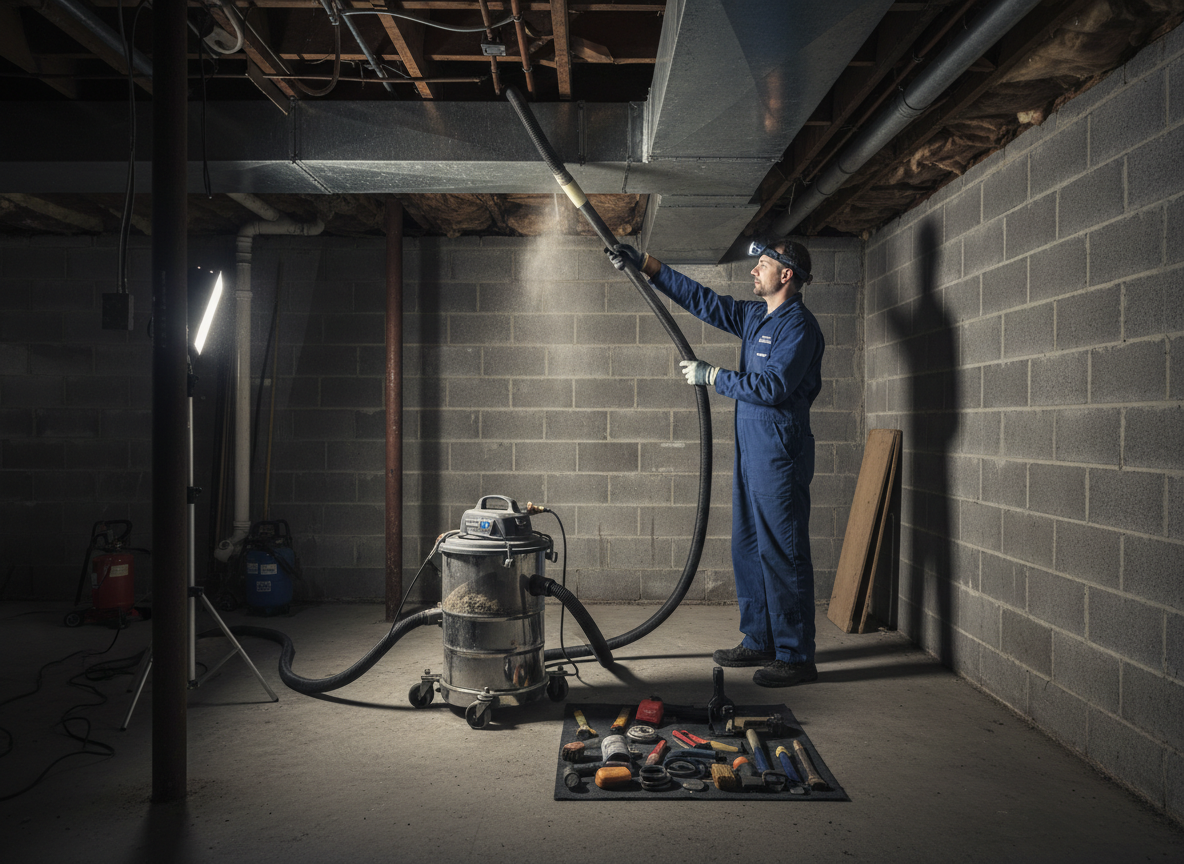
Basement duct runs in Benbrook homes often sit in crawl spaces or partial basements built before the 1980s, where limited headroom and low ceilings force techs to work on their backs with sectional rods rather than full vacuum heads. Clay soils common in Tarrant County shift with seasonal rains, creating small gaps at boot connections that pull in fine silt from the surrounding ground. Without addressing those entry points during cleaning, dust returns within a single summer cooling cycle.
Moisture from occasional heavy downpours can collect on metal duct exteriors when the system sits below grade, promoting light surface rust that flakes into the airstream. Technicians use inspection cameras first to map every branch before negative-air machines are attached at the main trunk near the furnace. Skipping the camera step risks leaving debris trapped behind collapsed flex runs that older Benbrook properties frequently contain.
Access doors added during the job must meet current IRC requirements for size and placement so future inspections remain possible without cutting finished basement ceilings. Homeowners in the 76126 zip code often request same-day service when pet dander or construction dust from nearby remodels begins circulating through registers located only a foot above the slab floor.
Technician insight
In Benbrook, the thing that catches most people out with basement air duct cleaning is the way clay soil around 76126 homes shifts after spring rains and pinches flex runs against floor joists, so the vacuum never reaches the last three feet without pulling the duct apart first.
South Benbrook Partial Basement
A homeowner on Benbrook Blvd noticed heavy dust on low registers after nearby road work. Camera inspection showed a collapsed flex section pinched by settled soil against the joists. The crew replaced the damaged flex, resealed three boots, and completed extraction in one visit, restoring full airflow without opening finished walls.
How it works
- 1
Initial Camera Inspection
Technicians run a lighted camera through every accessible basement trunk and branch to locate blockages, collapsed flex, and gaps created by soil movement.
- 2
Negative Air Setup
A HEPA-filtered vacuum is attached at the furnace end while supply and return registers are sealed to pull debris toward the machine without spreading it into living spaces.
- 3
Agitation and Extraction
Sectional rods and brushes loosen caked material along the full length of each run, with continuous vacuum extraction preventing re-deposition in the basement.
- 4
Final Walk-Through and Sealing
After extraction, every accessible connection is checked and resealed where soil shift has opened gaps, then registers are reinstalled and airflow is verified.
Pricing
Cost varies with total linear feet of basement duct and the number of access points required; quotes are provided after the camera inspection.