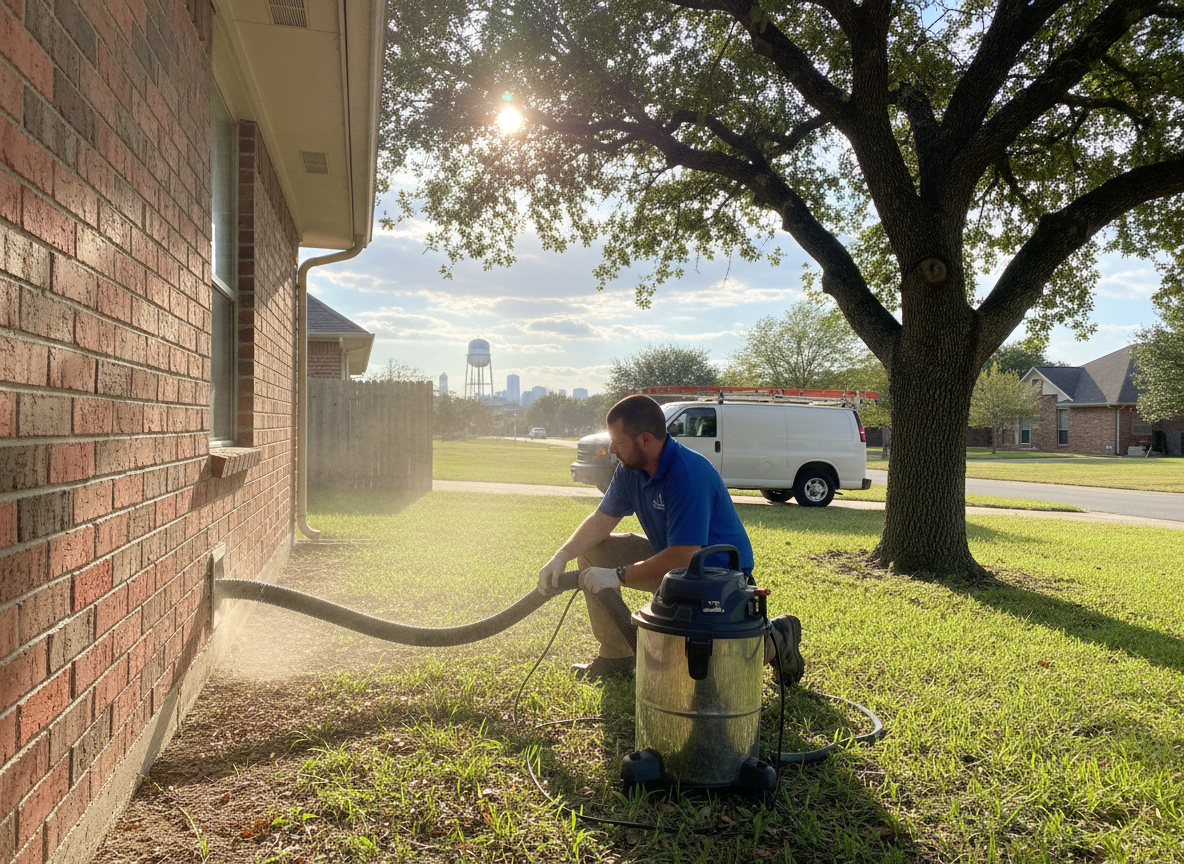
Benbrook homes built from the 1960s through the 1980s often feature single-story ranch layouts with dryer vents running 15 to 30 feet horizontally under slab foundations before exiting. These long runs collect heavy lint loads, especially when paired with the area's frequent high winds that push fine dust back into exterior terminations. Cedar Sync techs pull the vent from the wall at the 8516 Benbrook Blvd shop, then use rotary brushes sized for 4-inch pipe to clear the full length without damaging the flexible sections common in these older builds.
Tarrant County summers bring repeated 100-degree days that dry out lint quickly, turning it into a hard crust inside the pipe. Homeowners notice longer drying times and musty odors first. We always check the exterior hood flap for proper operation because wind-driven rain can warp cheap plastic flaps and let water back into the line, creating the perfect spot for mold once temperatures drop in winter.
Code requires a smooth metal vent with no screws penetrating the pipe and a maximum 25-foot effective length. Many Benbrook properties still have old foil flex that violates current IRC standards and collapses under negative pressure from the dryer fan. Our process includes replacing any non-compliant sections with rigid or semi-rigid metal before reassembly.
We finish every job by running the dryer on high heat for five minutes while monitoring exhaust temperature at the hood to confirm airflow has returned to normal. This step catches any remaining restrictions that a visual inspection misses.
Technician insight
In Benbrook the thing that catches most people out with dryer vent cleaning is the long horizontal runs under 1970s slab homes that trap moisture during our humid summers and then bake into a hard crust by August. Homeowners keep adding time to the cycle instead of pulling the vent once a year.
Hidden Restriction in a Benbrook Ranch
The homeowner in a 1978 single-story off Winscott Road reported clothes taking two cycles to dry. We pulled the vent and found 18 feet of collapsed foil flex buried under insulation. We replaced it with rigid metal, cleared the remaining lint, and restored normal airflow.
How it works
- 1
Inspection
We locate the dryer, disconnect the vent, and check the full run length plus exterior termination condition.
- 2
Cleaning
Rotary brush and vacuum system removes lint from the interior walls without damaging pipe seams.
- 3
Repair
Any crushed, torn, or non-compliant sections are replaced with code-approved metal duct.
- 4
Reassembly and Test
We reconnect everything, run the dryer, and verify strong airflow at the exterior hood.
Pricing
Pricing depends on vent length, number of turns, and whether rigid metal replacement is required.